Flow My Tears, the Policeman Said

Flow My Tears, the Policeman Said

Philip Kindred Dick

Philip Kindred Dick

On October 11 the television star Jason Taverner is so famous that 30 million viewers eagerly watch his prime-time show. On October 12 Jason Taverner is not a has-been but a never-was—a man who has lost not only his audience but all proof of his existence. And in the claustrophobic betrayal state of “Flow My Tears, the Policeman Said”, loss of proof is synonyms with loss of life. Taverner races to solve the riddle of his disappearance, immerses us in a horribly plausible Philip K. Dick United States in which everyone—from a waiflike forger of identity cards to a surgically altered pleasure—informs on everyone else, a world in which omniscient police have something to hide. His bleakly beautiful novel bores into the deepest bedrock self and plants a stick of dynamite at its center.
Read online
  • 70
Voices from the Street

Voices from the Street

Philip Kindred Dick

Philip Kindred Dick

Philip K. Dick Voices from the Street 1952. First published in 2007 by Tor. Stuart Hadley is a young radio electronics salesman in early 1950−s Oakland, California. He has what many would consider the ideal life; a nice house, a pretty wife, a decent job with prospects for advancement, but he still feels unfulfilled; something is missing from his life. Hadley is an angry young man—an artist, a dreamer, a screw-up. He tries to fill his void first with drinking, and sex, and then with religious fanaticism, but nothing seems to be working, and it is driving him crazy. He reacts to the love of his wife and the kindness of his employer with anxiety and fear. One of the earliest books that Dick ever wrote, and the only novel that has never been published, Voices from the Street is the story of Hadley’s descent into depression and madness, and out the other side. Most known in his lifetime as a science fiction writer, Philip K. Dick is growing in reputation as an American writer whose powerful vision is an ironic reflection of the present. This novel completes the publication of his canon.
Read online
  • 69
Martian Time-Slip

Martian Time-Slip

Philip Kindred Dick

Philip Kindred Dick

Warning: Although this the action of this book is set on Mars, it could just as easily have taken place in one of the desert communities around Los Angeles. The real action takes place inside the minds of the characters. If you're looking for all the external trappings of interplanetary Sci-Fi, you will be deeply disappointed. Approach it with an open mind, and you will be richly rewarded. What happens when one of the most powerful men on the planet Mars finds that real-estate speculators are intent on gobbling up the remote and seemingly worthless Franklin D Roosevelt mountains? Naturally he wants to find out why. A casual conversation with a psychologist followed by a chance encounter with a master repairman leads to one of those Dickian leaps: Since (1) autistic children do not respond to others because they are living in the future, (2) just build a machine to slow down time and (3) maybe even use it to go back in time and retroactively post a claim on the land before the speculators do. Well, the mechanism works, in a way. The speculators were proposing to build giant apartment blocks to help relieve overcrowding on polluted Earth. The autistic boy, Manfred Steiner, sees much further, however, to the time the apartment block would become a warehouse for the sick and dying, a "tomb world," of which he himself is a denizen. Manfred's visions have a way of bending the reality of those around him; he persistently retreats to a vision of reality as "gubble" -- entropy seen as large wormlike constructs that underlie reality, leading to pure "gubbish." MARTIAN TIME-SLIP is one of my favorite Philip K Dicks. (The problem is that I like all 15 or so I've read more or less equally.) Reading Philip K Dick tends to bend your sense of reality much as Manfred Steiner does. And one can't help looking over one's shoulder for a few hours after reading him. I see Dick as not so much a science fiction writer as a creator of disturbing and eerily plausible futures.
Read online
  • 66
The Three Stigmata of Palmer Eldritch

The Three Stigmata of Palmer Eldritch

Philip Kindred Dick

Philip Kindred Dick

In this wildly disorienting funhouse of a novel, populated by God-like—or perhaps Satanic—takeover artists and corporate psychics, Philip K. Dick explores mysteries that were once the property of St. Paul and Aquinas. His wit, compassion, and knife-edged irony make The Three Stigmata of Palmer Eldritch moving as well as genuinely visionary.
Read online
  • 64
Puttering About In a Small Land

Puttering About In a Small Land

Philip Kindred Dick

Philip Kindred Dick

By the time Roger and Virginia Lindhal enroll their son in Mrs. Alt’s Los Padres Valley School in the mountains of Southern California, their marriage is already in deep trouble. Then the Lindhals meet Chic and Liz Bonner, whose two sons also board at Mrs. Alt’s school. The meeting is a catalyst for a complicated series of emotions and traumas, set against the backdrop of suburban Los Angeles in the early fifties. This novel’s buildup of emotional intensity and finely observed characterizations are a hallmark of Philip K. Dick’s work. Filled with the details of everyday life and skillfully told from three points of view, Puttering About in a Small Land is powerful, eloquent, and gripping. Written 1957, first published 1985.
Read online
  • 63
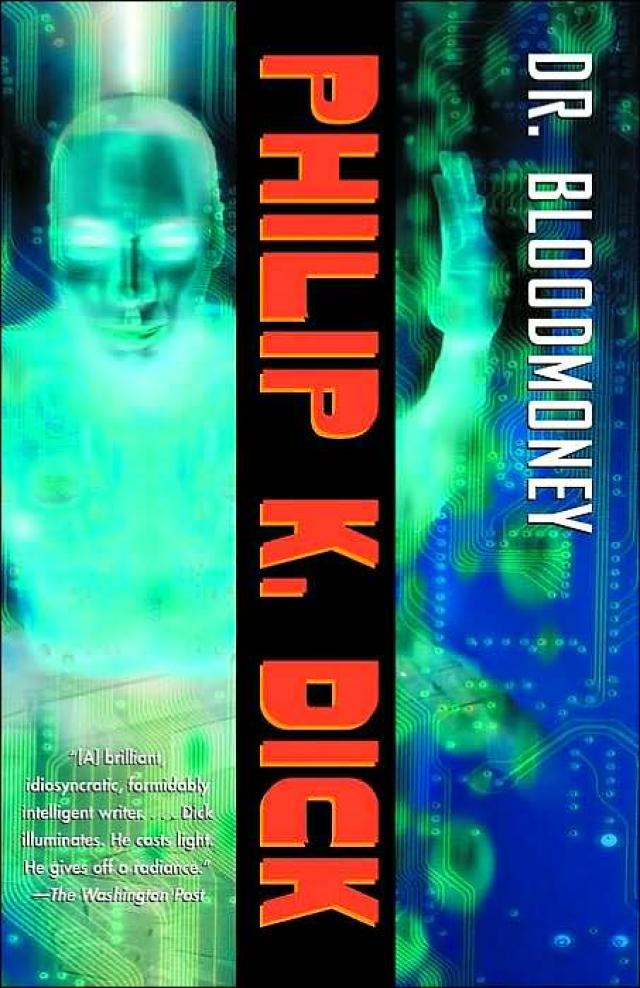
Dr. Bloodmoney, or How We Got Along after the Bomb

Dr. Bloodmoney, or How We Got Along after the Bomb

Philip Kindred Dick

Philip Kindred Dick

“Dr. Bloodmoney” is a post-nuclear-holocaust masterpiece filled with a host of Dick’s most memorable characters: Hoppy Harrington, a deformed mutant with telekinetic powers; Walt Dangerfield, a selfless disc jockey stranded in a satellite circling the globe; Dr. Bluthgeld, the megalomaniac physicist largely responsible for the decimated state of the world; and Stuart McConchie and Bonnie Keller, two unremarkable people bent the survival of goodness in a world devastated by evil. Epic and alluring, this brilliant novel is a mesmerizing depiction of Dick’s undying hope in humanity.
Read online
  • 60
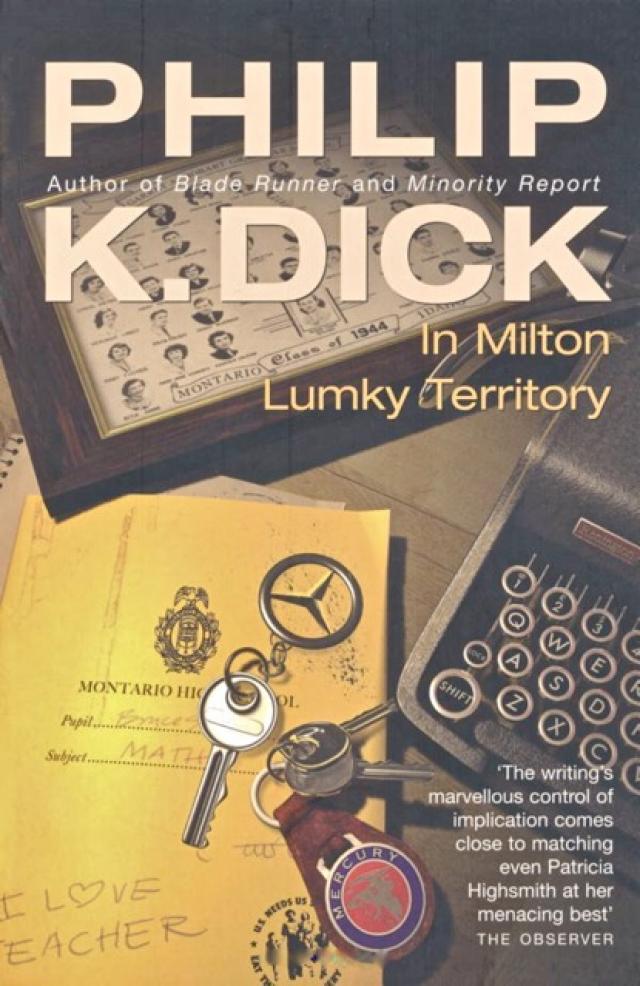
In Milton Lumky Territory

In Milton Lumky Territory

Philip Kindred Dick

Philip Kindred Dick

Philip K. Dick, In Milton Lumky Territory , written 1958-59, first published 1985. Bruce Stevens is a young buyer for a big discount house when he meets the recently divorced Susan Faine. She suggests that he might like to manage her ailing typewriter store and he leaps at the suggestion. Then he realizes that Susan was his teacher when he was in fifth grade. In spite of that, they are married within days. And then the odd compulsions and instabilities start to interfere with their plans. Milton Lumky, the paper salesman in whose area they live, is uneasy about their future...
Read online
  • 57
The Broken Bubble

The Broken Bubble

Philip Kindred Dick

Philip Kindred Dick

The Broken Bubble was written somewhere around 1956 under the longer title The Broken Bubble of Thisbe Holt , and was rejected for publication in the 1950−s, as were all of Dick’s ‘straight’ (non-SF) novels at the time. It was published posthumously with a shortened title in 1988. Currently out of print in the United States
Read online
  • 57
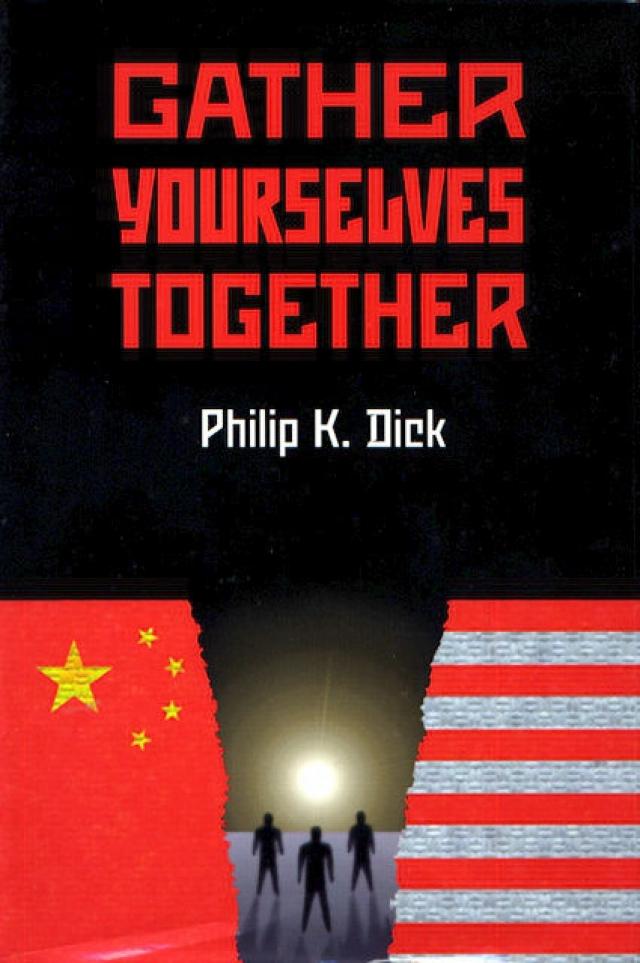
Gather Yourselves Together

Gather Yourselves Together

Philip Kindred Dick

Philip Kindred Dick

In 1952, a young Philip K. Dick wrote one of his first novels: Gather Yourselves Together. He’d already had success selling numerous SF short stories, but this was a serious, mainstream novel—a steamy, claustrophobic tale of two men and a woman isolated by circumstance, and alienated from each other by their pasts. Set in 1949 amongst the evacuation of American businesses from mainland China, middle-aged Verne Tildon and half-his-age Barbara Mahler are forced to put aside the lingering resentments and frustrations of a previous, stateside love affair in order to do the job they’ve been assigned, preparing a factory compound for transfer to the approaching Communists. Carl Fitter is the unsuspecting young man who finds himself unknowingly embroiled in their tensions, and around whose sexual awakening with Barbara the novel is structured. Never before published, this is a competent early novel that reveals Philip K. Dick’s obvious talent and skill in a manner quite unlike any other book he was ever to produce.
Read online
  • 56
155