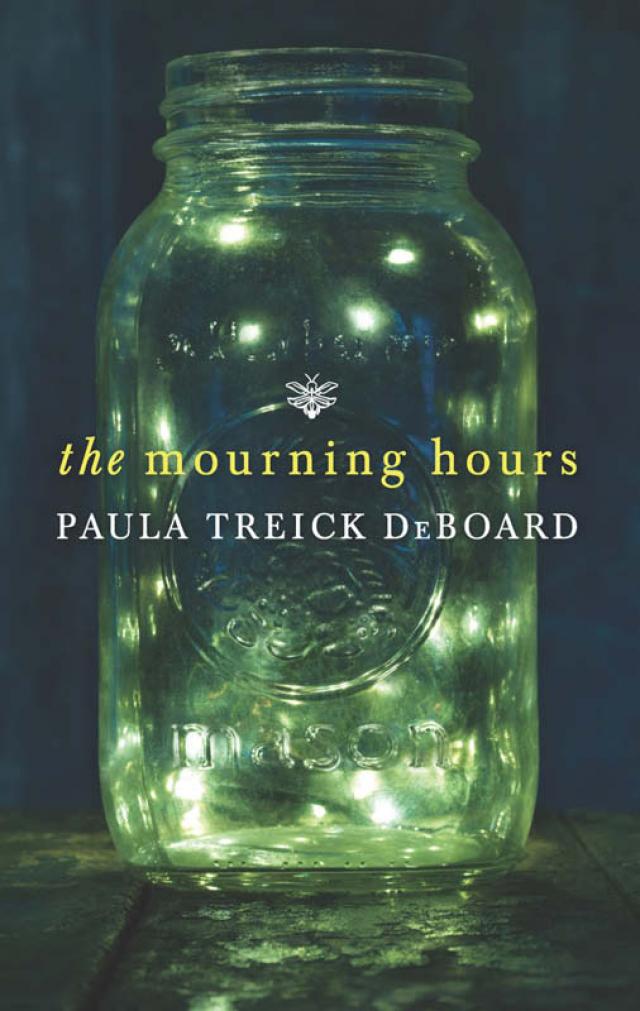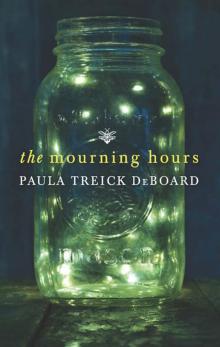
A family's loyalty is put to the ultimate test in this haunting and unforgettable debut.Kirsten Hammarstrom hasn't been home to her tiny corner of rural Wisconsin in years-not since the mysterious disappearance of a local teenage girl rocked the town and shattered her family. Kirsten was just nine years old when Stacy Lemke went missing, and the last person to see her alive was her boyfriend, Johnny-the high school wrestling star and Kirsten's older brother. No one knows what to believe-not even those closest to Johnny-but the event unhinges the quiet farming community and pins Kirsten's family beneath the crushing weight of suspicion. Now, years later, a new tragedy forces Kirsten and her siblings to return home, where they must confront the devastating event that shifted the trajectory of their lives. Tautly written and beautifully evocative, The Mourning Hours is a gripping portrayal of a family straining against extraordinary pressure, and a powerful tale of loyalty, betrayal and forgiveness.About the AuthorPaula Treick DeBoard lives with her husband Will and their four-legged brood in Modesto, CA. She received a BA in English from Dordt College, an MFA in Creative Writing from the University of Southern Maine and a practical education from countless students in her English classes over the years. The Mourning Hours is her first novel. Excerpt. © Reprinted by permission. All rights reserved.1994-1995Everything you needed to know, Dad said, you could learn on a farm. He was talking about things my mind, shaped by Bible stories and the adventures of Dick and Jane, could barely comprehend—the value of hard work, self-sufficiency, the life cycle of all things. Well, the life cycle—I did understand that. Things were always being born on farms, and always dying. And as for how they came to be in the first place, that was no great mystery. "They're mating," Dad would explain when I worried over a bull that seemed to be attacking a helpless heifer. "It's natural," he said, when the pigs went at it, when the white tom from Mel Wegner's farm visited and we ended up with litters of white kittens.Nature wasn't just ladybugs and fireflies—it was dirt and decay and, sometimes, death. To grow up on a farm was to know the smell of manure, to understand that the gawky calves that suckled my fingers would eventually be someone's dinner. It was to witness the occasional birth of a half-formed calf, missing eyes or ears, like some alien-headed baby. We couldn't drive into town without seeing the strange, bloodied remains of animals—cats, opossums and the occasional skunk who had risked it all for one final crossing. By the time we got Kennel, our retriever-collie mix, we'd had three golden Labs, each more loyal than the last, until they ran away during thunderstorms or wandered into the path of an oncoming semi headed down Rural Route 4. When Dad had spotted him at the county shelter, Kennel had a torn ear, a limp in his back left leg and ribs you could spot from a hundred yards away—the marks of an abusive owner.Even humans couldn't avoid their fates. Sipping lemonade from a paper cup after the Sunday morning service, I weaved between adult conversations, catching little snatches as I went. A tractor had tipped over, trapping the farmer underneath. Cows kicked, and workers were hurt. Pregnant women, miles from any hospital, went into early labor. Machines were always backfiring, shirtsleeves getting caught in their mechanisms. This was to say nothing of lightning strikes, icy roads and snowdrifts, or flash floods and heat waves. This was to say nothing of all the things that could go wrong inside a person.So we were used to death in our stoic, farm-bred way. It was part of the natural order of things: something was born, lived its life and died—and then something else replaced it. I knew without anyone telling me that it was this way with people, too.Take my family, for example—the Hammarstroms. My great-great-grandpa had settled our land and passed on the dairy to his son, who passed it to Grandpa, who passed it on to Dad, who would pass it on to Johnny. Dad and Mom had gotten married and had Johnny right after Dad graduated from high school, leaving Mom to get her degree later on, after Emilie and I were born. I'd always thought it was extremely cool that our parents were so much younger than everyone else's parents, until Emilie spelled out for me that it was something of a scandal. Anyway, when Johnny had been born, Grandpa and Grandma had moved to the inlaw house next door, where Dad and Mom would someday move, when it was time for Johnny and his wife to inherit the big house. This was simply the expected order of things, as natural as the corn being sown, thinned, watered, fertilized and harvested. Everything that was born would die one day. I knew this, because death was all around me.There was Grandma, for one. I was too young to have any concrete memories of her death, although I'd pieced together the facts from whispered conversations. She'd been standing in her kitchen, peeling apple after apple, when it happened. A pulmonary embolism, whatever that was. A freak thing. I couldn't walk into Grandpa's kitchen without thinking: Was it here? Was this the spot? But life had gone on without her. Grandpa stood at that sink every morning, drinking a cup of coffee and staring out the window.The first funeral I remember attending was for our neighbor, Karl Warczak, who'd collapsed in his manure pit, overwhelmed by the fumes. An ambulance had rushed past on Rural Route 4, and Dad and Mom had followed—Mom because she had just completed her training as a nurse, Dad because he and Karl Warczak had worked together over the years, helping with each other's animals, planting, harvesting, tinkering with stubborn machinery. By the time they'd pulled in behind the ambulance, Dad had said later, it had already been too late—sometimes, he'd explained, the oxygen just got sucked out of those pits.Mom had laid out my clothes the night before the funeral—a hand-me-down navy wool jumper that seemed to itch its way right through my turtleneck, thick white tights and a pair of too-big Mary Janes with a tissue wadded into the toes. She'd always been optimistic that I would grow into things soon. During the service I'd sat sandwiched between Mom and Emilie, willing myself not to look directly at the coffin. The whole ashes-to-ashes, dust-to-dust thing made me feel a little sick to my stomach once I really thought about it, and so did Mom's whisper that the funeral home had done "such a good job" with Mr. Warczak. It was incredible that he was really dead, that he had been here one minute and was gone the next, that he would never again pat me on the head with his dirtencrusted fingers. There had been such a solemn strangeness to the whole affair, with the organ music and the fussy bouquets of flowers, the men in their dark suits and the women in navy dresses, their nude pantyhose swishing importantly against their long slips."It is not for us to question God's perfect timing," Pastor Ziegler had intoned from the pulpit, but I remember thinking that the timing wasn't so great—not if you were Mr. Warczak, who thought he could fix the problem with the manure pump and then head inside for lunch, and not for his son, Jerry, who had been about to graduate from Lincoln High School and head off to a veterinary training program. The rumor had been that Mrs. Warczak's cancer was back, too, and this time it was inoperable. "That boy's going to need our help," Dad had told us when we were back in the car, riding with the windows open. "It's a damn shame.""Why did it happen?" I'd asked from my perch on top of a stack of old phone books in the backseat. I could just see out the window from that height—the miles of plowed and planted and fenced land that I would know blindfolded."Why did he die?""It was an accident. Just a tragic accident," Mom had said, blotting her eyes with a wad of tissue. She'd been up all morning, helping in the church kitchen with the ham and cheese sandwiches that were somehow a salve for grief. When we'd parked in our driveway, she'd gathered up a handful of soggy tissues and shut the door behind her."Oh, pumpkin," Dad had said as he sighed when I'd lingered in the backseat, arms folded across my jumper, waiting for a better answer. He'd promised to head over to the Warczaks' house later, to help Jerry out. "It's just how things go. It's the way things are." He'd reached over, giving my shoulder a quick squeeze in his no-nonsense, farmer-knows-best way.Somehow, despite all the years that passed, I never forgot this conversation, the way Dad's eyes had glanced directly into mine, the way his mustache had ridden gently on top of his lips as he'd delivered the message. He couldn't have known the tragedies that were even then growing in our soil, waiting to come to harvest.All he could do was tell me to prepare myself, to buck up, to be ready—because the way the world worked, you never could see what was coming.
Read online