The blacker the berry.., p.1
The Blacker the Berry . . ., page 1


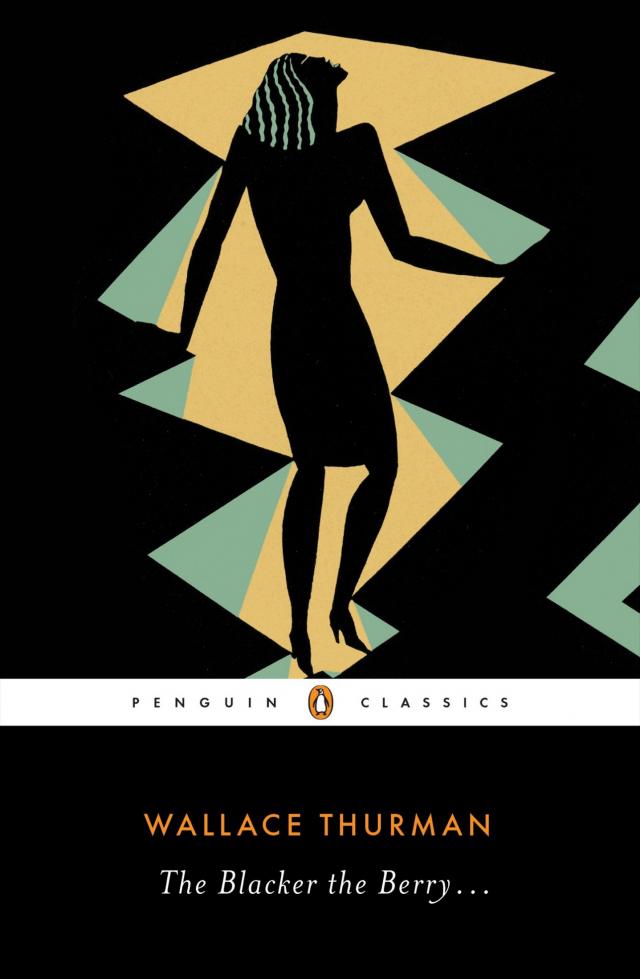
PENGUIN CLASSICS
THE BLACKER THE BERRY . . .
WALLACE THURMAN (1902–1934), a novelist, essayist, editor, and playwright of the Harlem Renaissance, was born in Salt Lake City, Utah, and moved to Harlem in 1925. In 1926 he became the editor of the socialist journal The Messenger, where he published the early stories of Langston Hughes. He left The Messenger later that year to cofound the literary magazine Fire!! along with Hughes and Zora Neale Hurston, among others. The Blacker the Berry . . . , his first novel, was published in 1929; he wrote two other novels, Infants of the Spring and The Interne, and a play, Harlem.
ALLYSON HOBBS is an associate professor in the department of history and the director of African and African American studies at Stanford. Her first book, A Chosen Exile: A History of Racial Passing in American Life, won the Frederick Jackson Turner Award for best first book in American history and the Lawrence Levine Award for best book in American cultural history, both from the Organization of American Historians. Hobbs is a Distinguished Lecturer for the Organization of American Historians and a contributor to newyorker.com and The New York Times Book Review.
PENGUIN BOOKS
An imprint of Penguin Random House LLC
375 Hudson Street
New York, New York 10014
penguin.com
First published in the United States of America by The Macaulay Company 1929
This edition with an introduction by Allyson Hobbs published in Penguin Books 2018
Introduction copyright © 2018 by Allyson Hobbs
Penguin supports copyright. Copyright fuels creativity, encourages diverse voices, promotes free speech, and creates a vibrant culture. Thank you for buying an authorized edition of this book and for complying with copyright laws by not reproducing, scanning, or distributing any part of it in any form without permission. You are supporting writers and allowing Penguin to continue to publish books for every reader.
LIBRARY OF CONGRESS CATALOGING-IN-PUBLICATION DATA
Names: Thurman, Wallace, 1902–1934, author. | Hobbs, Allyson Vanessa, writer of introduction.
Title: The blacker the berry / Wallace Thurman ; introduction by Allyson Hobbs.
Description: New York : Penguin Books, 2018. | Series: Penguin classics
Identifiers: LCCN 2017031458 (print) | LCCN 2017031624 (ebook) | ISBN 9781524705732 (ebook) | ISBN 9780143131878 (paperback)
Subjects: LCSH: African American women—Fiction. | Harlem (New York, N.Y.)—Fiction. | Psychological fiction. | BISAC: FICTION / African American / General. | FICTION / Literary. | FICTION / Classics.
Classification: LCC PS3539.H957 (ebook) | LCC PS3539.H957 B53 2018 (print) | DDC 813/.52—dc23
LC record available at https://lccn.loc.gov/2017031458
Cover art: Aaron Douglas (1899–1979)
Version_1
To Ma Jack
The blacker the berry
The sweeter the juice . . .
—NEGRO FOLK SAYING
My colour shrouds me in . . .
—COUNTEE CULLEN
Contents
About the Author
Title Page
Copyright
Dedication
Epigraph
Introduction by ALLYSON HOBBS
Suggestions for Further Reading
THE BLACKER THE BERRY . . .
Part 1—Emma Lou
Part 2—Harlem
Part 3—Alva
Part 4—Rent Party
Part 5—Pyrrhic Victory
Introduction
“My color shrouds me in.” With this quote by Harlem Renaissance writer Countee Cullen, the story of Emma Lou Morgan begins. Through Emma Lou’s experiences, Wallace Thurman delves deep into the painful history of colorism—a term defined by Alice Walker to mean “prejudicial or preferential treatment of same-race people based solely on their color.”1 Emma Lou, as Thurman writes, “was black, too black, there was no getting around it.” Her skin color overdetermined her life circumstances and alienated her from lighter family members, including her grandmother, who took pride in her “blue veins,” and her mother, who wished that Emma Lou had been a boy because “black boys can make a go of it, but black girls . . .” (85). Emma Lou does not mind being black—though she “did mind being too black”—yet she wonders, “Why had her mother married a black man? Surely there had been some eligible brown-skin men around” (3).
Emma Lou’s complexion is “a liability,” “a decided curse,” and a tragedy that befalls her no matter where she goes. Unloved in her hometown of Boise, Idaho, Emma Lou believes she will find happiness in college, at the University of Southern California, with more sophisticated peers. “Boise was a provincial town,” she muses, “given to the molding of provincial people with provincial minds. Its people were cramped and narrow, their intellectual concepts stereotyped and static. Los Angeles was a happy contrast in all respects” (15). Sadly, Emma Lou’s dreams do not come true in Los Angeles. The “right sort of people” shun her, she is not invited to join their sororities or social clubs, and no respectable black man will date her. She quickly draws the conclusion that “there was no place in the world for a dark girl” (34). Even Harlem—the epicenter of black life in America—provides no refuge for Emma Lou. The black metropolis where, as Thurman wrote, “anything can happen and everything does,” could not save Emma Lou from unfulfilling employment, exploitation by light-skinned men, and growing disillusionment.2
In Wallace Thurman, Langston Hughes saw “a strangely brilliant black boy who had read everything, and whose critical mind could find something wrong with everything he read.”3 Similar to Emma Lou, Thurman was dark-skinned and a Westerner. Born in Salt Lake City, he was the only black student in his school. He also attended the University of Southern California and was treated poorly in Los Angeles by whites and experienced intragroup prejudice from blacks whom he perceived as pretentious.4 Like Emma Lou, Thurman settled in Harlem during the 1920s. He became a leading and legendary figure in the Harlem Renaissance, part of the “niggerati,” as Zora Neale Hurston famously called the group of intellectuals and artists.5 Working with A. Philip Randolph, Thurman became an editor of The Messenger, and in 1926 he founded, with Langston Hughes, Zora Neale Hurston, Aaron Douglas, Gwendolyn Bennett, and Bruce Nugent, the journal Fire!! It was a bold and innovative publication that featured the work of younger artists but was disliked by the black middle class because of its candid presentation of black life. In 1929 Thurman collaborated with white playwright William Jordan Rapp to write and produce the play Harlem, which ran for ninety-three performances and became “the first successful play written entirely or in part by a Negro to appear on Broadway.”6
Thurman believed that African Americans could overcome racial barriers, but he experienced countless incidents of racism during his short life. In a letter to Rapp, he wrote that he purchased tickets in the center aisle to see Harlem, and on five occasions, including opening night, he was seated “on the side in a little section where any other Negro who happened to buy an orchestra seat was also placed.”7 He was troubled by the spread of what he perceived as Southern-style segregation in Salt Lake after a taxi driver refused to take him home from the railroad station. In Los Angeles, his reservations on a train were rejected. New York, to Thurman’s mind, was “heaven compared to the rest of the country.” One might have an unpleasant experience there, but at least, as Thurman remarked to Rapp, “people don’t stare at you or jump away as if you were a leper.”8
Also in 1929, Thurman published The Blacker the Berry . . . . Celebrated at the time of publication, the novel is now underappreciated. It is not read nor is it cited as often as other novels of the Harlem Renaissance era. Some literary scholars believe that the popularity of the novel was cut short because its themes of color consciousness and intraracial conflict clashed with the temper of the civil rights era. Emma Lou is a less familiar protagonist than her fictional counterparts Helga Crane, Irene Redfield, and Clare Kendry, three women from Nella Larsen’s novels. Thurman and Larsen both suggest that there are few, if any, available avenues for middle-class black women. Among these characters, however, Emma Lou is the only one who survives, remains unmarried, and continues to be self-sufficient. Unlike Irene Redfield, she does not retreat into middle-class respectability. Black women’s sexual desire is not thinly veiled in The Blacker the Berry . . . as it is in Quicksand and Passing. Emma Lou takes part in sex outside of the confines of marriage; indeed she actively seeks sexual partners and asserts that she does not regret the “loss of her virtue.” She engages in a similar search as other characters for a stable sense of self. Still, Emma Lou’s primary dilemma is one of color and complexion.
Thurman had his own dilemmas. Living as a dark-skinned man was one; his sexuality was another. He did not comport entirely with the norms of homosexual or heterosexual culture. Describing Thurman as “an explorer,” literary scholar Granville Ganter argues that Thurman’s fluid sexuality works as a metaphor for the “breadth of his imaginative vision as a writer and artist.”9 Exploration led Thurman to examine aspects of black life as they were, in flesh and blood—raucous rent parties, sexual relationships outside of marriage, homosexuality—and not as middle-class blacks governed by respectability politics believed they should be.
In 1925, in a real-life scandal that reads like fiction (and would later bec ome the plot of one of Thurman’s short stories, “Cordelia, the Crude,” published in Fire!!), Thurman spent forty-eight hours in jail after he was caught engaging in a sexual act with a man in a bathroom. A minister bailed Thurman out of jail, and Thurman later discovered that the minister “too belonged to the male sisterhood.”10 After Thurman refused to pay him for his silence, word spread and reached Thurman’s wife, who used the scandal against him in their divorce. Thurman acknowledged that the incident did happen, but he claimed that there was “no evidence” that he was homosexual. He knew that there was “a certain group of Negroes in Harlem” who relished and relayed the news about his sexuality far and wide. In an earlier letter to Rapp, Thurman had written that he was at “a very low ebb” and wished he had gone to Europe but wondered if he would not have been equally troubled there. He wished Rapp “could take [his] place in Negro society for about a week.” As he explained:
I am afraid that I am losing my sense of humor, for I find myself less able to laugh at things and more inclined to let them depress me. Even on the train I was beset by a Pullman porter for my dastardly propaganda against the race. And here at the house a delegation of church members (at my grandmother’s request) flocked in on me and prayed over me for almost an hour, beseeching the Almighty to turn my talents into the path of righteousness. All of which is amusing until the point of saturation is reached.11
After a scuffle with his grandmother’s minister, Thurman knew that his “‘ostracisation’ among polite colored circles in Salt Lake [was] now complete.” Yet it is unclear whether such an exclusion bothered him. At times, Thurman seemed anxious to prove his heterosexuality; at other times he seemed to accept his homosexuality, despite the distance it created between him and his family.
The message of The Blacker the Berry . . . is one of self-acceptance. Thurman presents Emma Lou’s travails as the result of her own discomfort with herself, caused by her adherence to the values of her family, who believes that lighter-skinned people are more respectable and desirable. W. E. B. Du Bois expressed disappointment in Thurman’s depictions of less refined African Americans and his decision to write a “self-despising” book that appeared to “deride blackness.”12 Thurman’s own desire to be accepted and loved can be seen in his analysis of the psychological costs of intraracial prejudice. His longing is palpable. His biographer Eleonore van Notten writes of Thurman’s position as an outcast, “[his] egoism . . . provoked social alienation rather than transcendence.”13 Thurman wrestled with his identity and searched for a place to call home while Langston Hughes, who had his own equally complicated identity, called for self-acceptance with a more assured voice:
We younger Negro artists who create now intend to express our individual dark-skinned selves without fear or shame. If white people are pleased, we are glad. If they are not, it doesn’t matter. We know we are beautiful. And ugly too. The tom-tom cries and the tom-tom laughs. If colored people are pleased we are. If they are not, their displeasure doesn’t matter either. We build our temples for tomorrow, strong as we know how, and we stand on top of the mountain, free within ourselves.14
During his time, Thurman was celebrated for writing novels and short stories and producing plays that offered honest, unabashed depictions of black life. The Blacker the Berry . . . was hailed by advertisements as “a thumping good novel of the night-life hilarity and bitter tragedy that are really Harlem” and “the most honest and accurate book yet written around Negro life.”15 Hughes sent a telegram to Thurman with the message, “Your potential soars like a kite breaking patterns for Negro writers.”16
In 2015, Kendrick Lamar, who has been called the best rapper of his generation and the greatest rapper alive, released a song titled “The Blacker the Berry.”17 The song was streamed more than a million times in the first twenty-four hours after its release.18 The song’s narrator experiences an awakening of his racial consciousness at the age of sixteen and recognizes that as a black man, he is hated in America: “I mean, it’s evident that I’m irrelevant to society. That’s what you’re telling me: Penitentiary would only hire me.”19 Proclaiming “I’m African American, I’m African, I’m black as the heart of a fuckin’ Aryan . . . black as the name of Tyrone and Darius,” the narrator expresses a strong sense of racial pride, which resonates with the messages in other songs by Lamar about self-love and acceptance in a hateful and denigrating culture. Lamar raps: “You hate my people, your plan is to terminate my culture. . . . You’re fuckin’ evil. I want you to recognize that I’m a proud monkey. You vandalize my perception but can’t take style from me. . . .”20 The title, “The Blacker the Berry,” has different meanings for Thurman and Lamar. Thurman’s novel reveals the intraracial conflict that results from living in a racist America; almost ninety years later, Lamar’s focus is the racist system itself.
The tragedy of Thurman’s life was that it was so short. He died at the age of thirty-two, of tuberculosis, in December of 1934. He was still wrestling with himself and struggling to find a place where he belonged. He wrote to William Jordan Rapp, “I am astonished and alarmed by my condition. Do I need a change of air? I cannot tell. Is it my sick body that weakens my will and mind, or is it a spiritual cowardice wears out my body? I do not know. What I do feel is an immense discouragement, a sensation of unbearable isolation, a perpetual fear of some remote disaster, an utter disbelief in my capacity, a total absence of desire, an impossibility of finding any kind of interest.”21 He had just flown back to New York after what would be his final visit to the West.22 We cannot know how far his gifts and talents might have taken him.
ALLYSON HOBBS
NOTES
1 Itabari Njeri, “Colorism: In American Society, Are Lighter-Skinned Blacks Better Off?” Los Angeles Times, April 24, 1988 (http://articles.latimes.com/1988-04-24/news/vw-2472_1_skin-color).
2 Catherine Rottenberg, “Wallace Thurman’s The Blacker the Berry and the Question of the Emancipatory City,” Mosaic: An Interdisciplinary Critical Journal, December 2013, 69.
3 Gerald Haslam, “Wallace Thurman: A Western Renaissance Man,” Western American Literature 6:1, Spring 1971, 53.
4 Ibid., 53–54.
5 Hilton Als, “The Sojourner,” The New Yorker, February 23 & March 2, 2015 (http://www.newyorker.com/magazine/2015/02/23/sojourner).
6 Haslam, 55.
7 Wallace Thurman to William Jordan Rapp, n.d., series I, box 1, folder 7, James Weldon Johnson Memorial Collection (JWJ MSS 12), Wallace Thurman Collection, Beinecke Rare Book and Manuscript Library, Yale University, New Haven, CT.
8 Wallace Thurman to William Jordan Rapp, n.d., series I, box 1, folder 7, Wallace Thurman Collection, Beinecke Rare Book and Manuscript Library, Yale University, New Haven, CT.
9 Granville Ganter, “Decadence, Sexuality, and the Bohemian Vision of Wallace Thurman,” MELUS, Summer 2003, 85.
10 Wallace Thurman to William Jordan Rapp, series I, box 1, folder 7, William Jordan/1928, 1929, n.d., Wallace Thurman Collection, Beinecke Rare Book and Manuscript Library, Yale University, New Haven, CT.
11 Wallace Thurman to William Jordan Rapp, n.d., series I, box 1, folder 7, Wallace Thurman Collection, Beinecke Rare Book and Manuscript Library, Yale University, New Haven, CT.
12 Ganter, 83.
13 Quoted in Stephen O. Murray, “Wallace Thurman: Gay Impresario of the Harlem Renaissance,” The Tangent Group, September 12, 2000 (http://www.tangentgroup.org/wallace-thurman).
14 Quoted in Als.
15 Wallace Thurman Collection, series II, box 2, folder 37, Beinecke Rare Book and Manuscript Library, Yale University, New Haven, CT.
16 Arnold Rampersad and David Ernest Roessel, eds. Selected Letters of Langston Hughes (New York: Alfred A. Knopf, 2015), 130.
17 Brian Hiatt, “The Humble King,” Rolling Stone, August 24, 2017, 40.
18 Spencer Kornhaber, “Kendrick Lamar Is Not a Hypocrite,” The Atlantic, February 11, 2015 (https://www.theatlantic.com/entertainment/archive/2015/02/kendrick-lamar-is-not-a-hypocrite/385384).